
Bottle, Pump and Formula Compatibility Test Plan
Build a justified protocol around the marketed formula, production-equivalent components and agreed failure criteria.
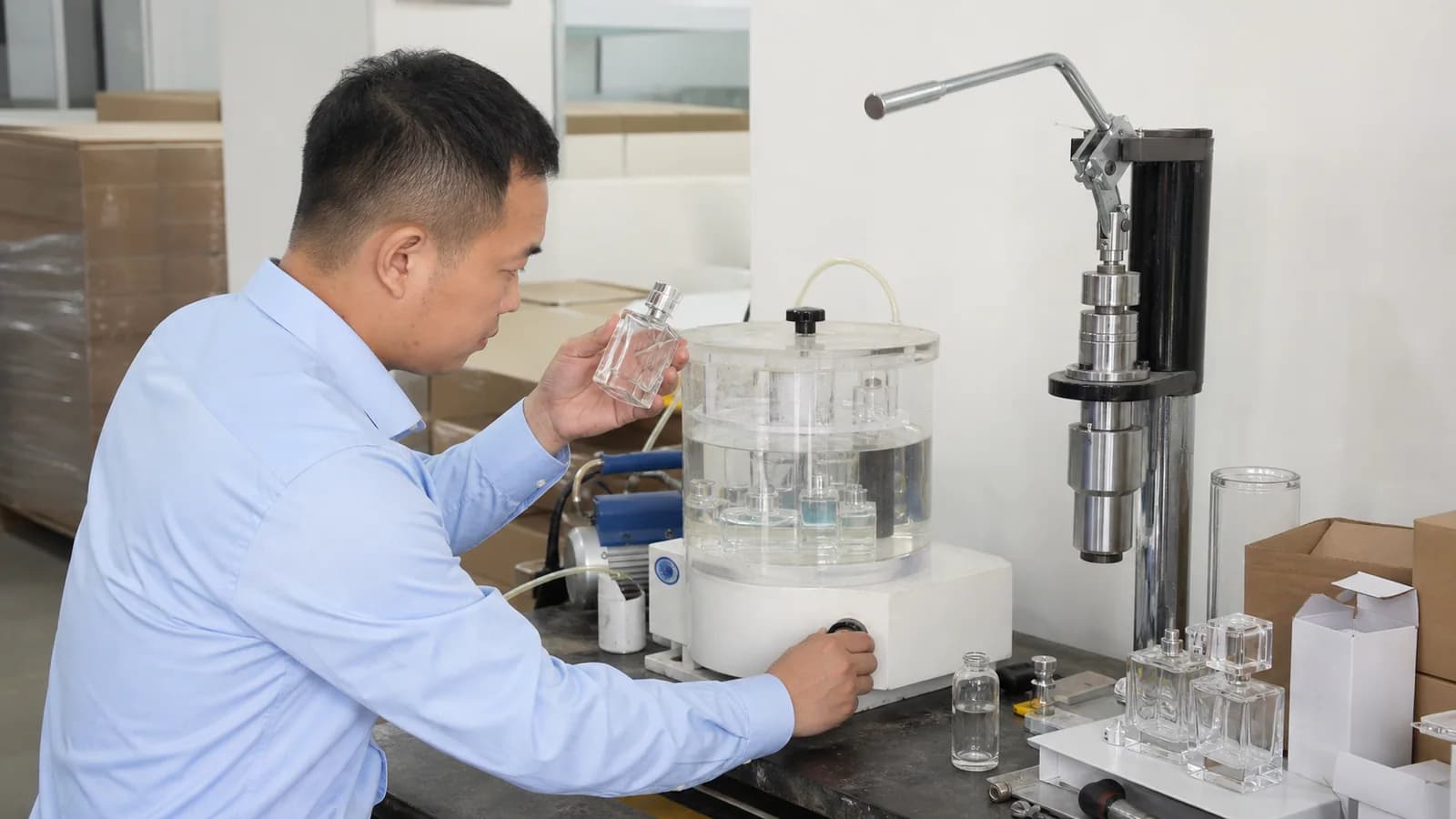
Direct answer
There is no universal compatibility test. Define conditions and acceptance criteria for the actual formula, bottle, pump, gasket, dip tube, decoration and expected storage and use.
Define failure before testing
Agree limits for appearance, odour, colour, mass loss, leakage, pump dose and pattern, priming, material change, cap fit and decoration damage before the study starts.
- Formula and component lots
- Storage conditions
- Measurement methods
- Acceptance limits
Use production-equivalent packs
Test the marketed formula in components made from the intended production materials and process. Accelerated work can identify risk, but retained real-time samples are still useful.
- Actual formula
- Production-equivalent bottle and pump
- Actual gasket and dip tube
- Decorated components
Control every meaningful change
Changes to formula, supplier, gasket, spring, dip tube, coating, adhesive or assembly can affect earlier results. Record the change and decide whether the compatibility test needs to be repeated.
- Formula revision
- Bill-of-material revision
- Supplier or site change
- Retest decision
Buyer questions
Can water replace perfume in the final test?
Only when technical equivalence is justified; it should not be assumed by default.
Does fragrance conformity prove package compatibility?
No. Formula-use restrictions and packaging interaction are different evaluations.